

Pivot Points in Technical Analysis: A Complete Guide for NEPSE Traders
What Are Pivot Points?
Pivot Points are a popular technical analysis indicator used to identify potential support and resistance levels in the stock market. They are especially useful for intraday and short-term traders who want objective price levels to plan trades.
The core pivot point is calculated using the previous period's high, low, and closing prices. Based on this central level, additional support (S1, S2, S3) and resistance (R1, R2, R3) levels are generated. Traders use these levels to assess market sentiment and determine likely turning points.
How Pivot Points Work
If the current price is trading:
- Above the Pivot Point (PP): Market sentiment is considered bullish.
- Below the Pivot Point (PP): Market sentiment is considered bearish.
These levels act as a roadmap for the trading session, helping traders identify:
- Potential entry points
- Profit targets
- Stop-loss zones
- Breakout opportunities
Pivot Point Formula
PP=H+L+C3PP = \frac{H + L + C}{3}
Where:
- H = Previous day's High
- L = Previous day's Low
- C = Previous day's Close
Support and Resistance Formulas
First Levels
- R1 = (2 × PP) − L
- S1 = (2 × PP) − H
Second Levels
- R2 = PP + (H − L)
- S2 = PP − (H − L)
Third Levels
- R3 = H + 2(PP − L)
- S3 = L − 2(H − PP)
Example Calculation
Suppose a NEPSE-listed stock had:
- High = Rs. 500
- Low = Rs. 470
- Close = Rs. 490
Pivot Point
PP = (500 + 470 + 490) ÷ 3 = 486.67
Key Levels
- R1 = 503.34
- S1 = 473.34
- R2 = 516.67
- S2 = 456.67
These become important price levels for the next trading session.
How to Interpret Pivot Points
Bullish Scenario
If price opens above the pivot point and holds, traders may look for buying opportunities with targets near R1 and R2.
Bearish Scenario
If price opens below the pivot point, traders may look for selling opportunities or avoid buying until strength returns.
Breakout Trading
A strong move above resistance or below support may indicate trend continuation.
Reversal Trading
Price rejection at support or resistance can signal short-term reversals.
Best Timeframes for Pivot Points
Pivot Points are most effective on:
- 5-minute charts
- 15-minute charts
- Hourly charts
- Daily charts
In NEPSE, they are widely used by:
- Intraday traders
- Swing traders
- Momentum traders
Types of Pivot Points
Several variations are used by traders:
- Standard Pivot Points
- Fibonacci Pivot Points
- Camarilla Pivot Points
- Woodie Pivot Points
- DeMark Pivot Points
Standard Pivot Points are the most common and easiest to understand.
Pivot Points Trading Strategies
1. Trend Trading Strategy
Buy above the pivot point in an uptrend and sell below it in a downtrend.
2. Breakout Strategy
Enter when price breaks R1 or S1 with strong volume.
3. Reversal Strategy
Trade when price rejects support or resistance levels.
4. Target-Based Strategy
Use the next pivot level as your profit target.
Combining Pivot Points with Other Indicators
Pivot Points work better when used with other tools such as:
- RSI (Relative Strength Index)
- MACD
- VWAP
- Bollinger Bands
- Volume Analysis
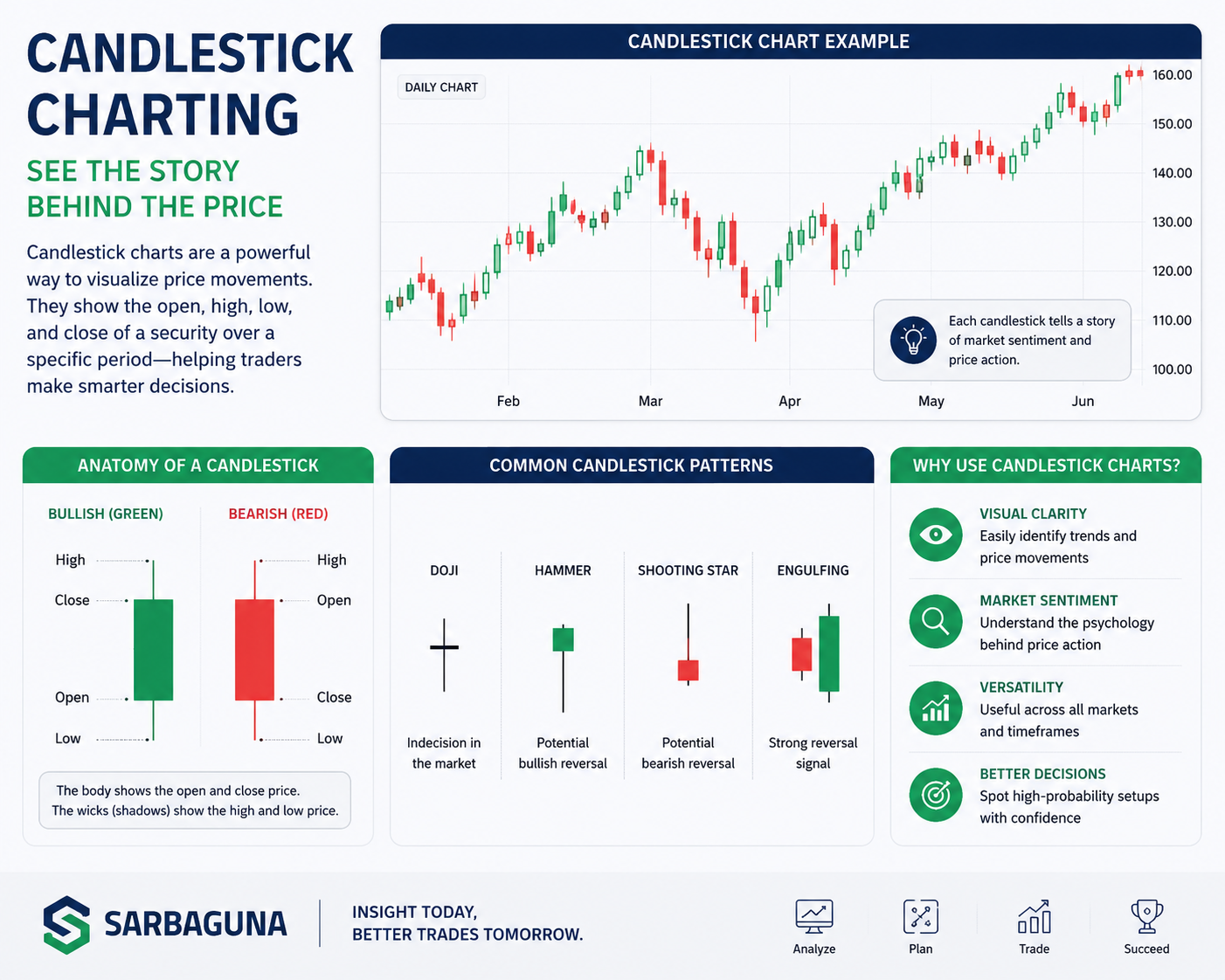
- Candlestick Patterns
For example, if price is above the pivot point and RSI is rising, the bullish signal becomes stronger.
Advantages of Pivot Points
- Easy to calculate
- Objective and rule-based
- Excellent for short-term trading
- Useful for setting stop-loss and targets
- Works across all liquid stocks
Limitations of Pivot Points
- Less effective in highly volatile markets
- Can produce false breakouts
- Should not be used alone
- Historical data may not always predict future price behavior
Pivot Points in NEPSE Trading
Pivot Points are highly effective in Nepal’s stock market because many traders monitor the same support and resistance levels. They are particularly useful in actively traded sectors such as:
- Banking
- Hydropower
- Finance
- Insurance
Combining Pivot Points with volume and candlestick confirmation can improve trade accuracy.
Practical NEPSE Trading Tips
- Focus on liquid stocks.
- Wait for candle confirmation near pivot levels.
- Use strict stop-loss rules.
- Avoid trading solely based on one indicator.
- Maintain a favorable risk-reward ratio.
Common Mistakes to Avoid
- Entering without confirmation
- Ignoring overall market trend
- Chasing false breakouts
- Using oversized positions
- Neglecting stop-loss placement
Conclusion
Pivot Points are one of the most practical technical indicators for identifying support and resistance levels. They help traders make structured decisions about entries, exits, and risk management.
For NEPSE traders, Pivot Points provide a clear and disciplined framework to navigate daily market movements. When combined with other technical indicators and sound risk management, they can significantly enhance trading performance.
Frequently Asked Questions (FAQs)
Are Pivot Points good for beginners?
Yes. They are straightforward and provide clear price levels to monitor.
Do Pivot Points work in NEPSE?
Yes. They are widely used by technical traders in Nepal.
Which Pivot Point type is best?
Standard Pivot Points are the most commonly used and easiest to apply.
Can Pivot Points predict exact price movements?
No. They highlight probable support and resistance zones, not guaranteed outcomes.
Related Articles
- Relative Strength Index (RSI)
- Bollinger Bands
- VWAP
- MACD
- Support and Resistance
Sarbaguna Investment provides professional stock market training, technical analysis education, and daily market insights focused on the Nepal Stock Exchange (NEPSE).
📞 WhatsApp / SMS Support: +977-9849290806
🌐 Website: Sarbaguna Investment
Learn. Invest. Grow.
Tags


Leave a Comments
Comments

Popular






Recent Post
No comments yet.