

Investor Security vs. System Vulnerability: How Safe Are Share Assets Following the DataHub Ransomware Incident?
Investments in NEPSE remain safe in terms of legal share ownership, but the current market environment carries heightened operational, cyber and liquidity risks that investors must navigate carefully before trading again.
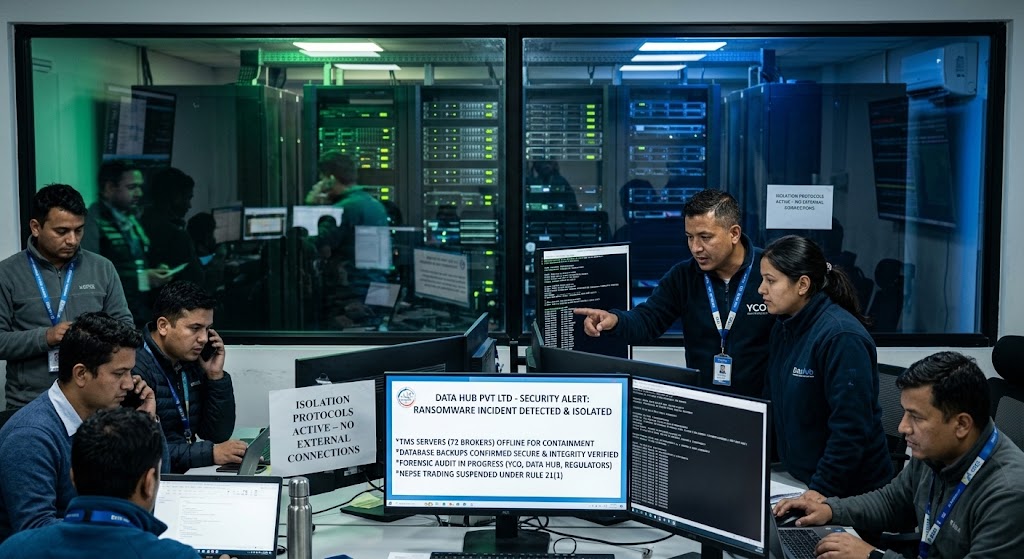
Recent reports confirm that the server outage at Data Hub Pvt. Ltd was caused by a ransomware cyberattack affecting 72 brokerage houses, forcing NEPSE to suspend regular trading to protect core systems.
1. Safety Breakdown: Share Holdings vs. Market Trading
2. Is It Safe to Place New Trades Once Market Reopens?
Yes, but proceed with caution. Investing during or immediately after a major infrastructure crisis carries specific short-term risks:
-
System Instability & Order Glitches: Immediately after servers are brought back online, high volume can cause lag or duplicate order entries. Avoid placing panic orders during the first few minutes of system restoration.
-
Order Cancellation Hazards: Check the status of all pending/unexecuted orders placed before the system went offline. Ensure old orders are canceled before placing new ones to avoid unintended duplicate buys/sells.
-
Execution Price Slippage: Market volatility often spikes right after an extended halt. Limit orders are strongly recommended over market orders to lock in exact purchase/sale prices.
Key Pre-Investment Checklist Before Re-entering the Market
-
Verify Recovery Notices: Wait for formal clearance notices from both SEBON and NEPSE confirming that cybersecurity assessments are complete.
-
Audit Demat Balance: Cross-check your MeroShare portfolio against broker transaction statements to confirm no unauthorized trade records exist.
-
Verify Order Book: Review your active order book in TMS to confirm unexecuted orders were systematically cleared or reset.


Leave a Comments
Comments
Popular






No comments yet.