

Nepal Capital Market Reform: 5 Directives for NEPSE
Nepal Capital Market Reform: Finance Committee Issues 5 Directives to Curb Stock Market Manipulation
Nepal’s capital market reform agenda has gained renewed attention after the Finance Committee of the House of Representatives issued five directives aimed at improving market transparency, strengthening investor protection, modernizing trading infrastructure, and controlling irregular activities in the secondary stock market.
The directives, reported on September 30, 2026, call for changes to securities legislation, stricter screening of companies seeking to issue Initial Public Offerings (IPOs), improvements to the Nepal Stock Exchange (NEPSE), stronger surveillance against market manipulation, and the appointment of chief executive officers at NEPSE and CDS and Clearing Limited (CDSC).
The proposed measures address several longstanding issues in Nepal’s stock market, including regulatory accountability, IPO quality, trading-system reliability, and the need for effective market supervision.
Five Major Directives for Nepal’s Capital Market
1. New Securities Legislation to Strengthen Investor Protection
The Finance Committee has directed the Ministry of Finance and the Securities Board of Nepal (SEBON) to prepare a new securities bill and present it to the Federal Parliament without delay.
The proposed legislation is intended to clarify the roles, responsibilities, and accountability of SEBON, NEPSE, and CDSC.
A clearly defined regulatory framework could help address institutional overlaps, improve accountability, and strengthen investor protection. The directive also reflects the committee’s view that the existing legal framework is insufficient to meet the needs of a modern and transparent capital market.
The actual impact will depend on the provisions included in the proposed bill and its eventual implementation.
2. Stricter IPO Screening and Review of Promoter Shareholding Rules
The committee has called for companies seeking IPO approval to undergo mandatory grading and prioritization based on key financial and operational indicators.
These include:
-
Capital adequacy and financial strength
-
Technological capacity
-
Net worth
-
Balance-sheet position
-
Financial returns and other relevant indicators
The objective is to improve the assessment of companies before they enter the public market.
The committee has also asked SEBON to review existing rules concerning the shareholding that promoters must retain. This follows concerns about risks arising when promoters sell their shares and exit companies.
For investors, stronger IPO screening could provide additional information for evaluating the financial position and business quality of companies before investing.
However, IPO grading alone cannot eliminate investment risk. Investors should continue to examine a company's earnings, liabilities, cash flow, management, valuation, and business prospects.
3. NEPSE Restructuring and Modernization of Trading Systems
The Finance Committee has directed the relevant authorities to accelerate the restructuring of NEPSE and resolve disruptions affecting the Nepal Online Trading System (NOTS) and associated data systems.
The directive also emphasizes upgrading trading infrastructure and strengthening cybersecurity.
Reliable trading systems are essential for investors, brokers, listed companies, and market regulators. Technical disruptions can affect access to market information and the execution of transactions.
Modernization efforts are expected to focus on:
-
Improving trading-system stability and performance
-
Addressing recurring technical and data-related disruptions
-
Strengthening cybersecurity protections
-
Advancing the restructuring of NEPSE
-
Supporting a more reliable and transparent trading environment
The Ministry of Finance, SEBON, and NEPSE have been identified as relevant authorities for these improvements.
4. Stronger Surveillance Against Market Manipulation
The committee has instructed SEBON and NEPSE to intensify monitoring of suspicious activities in the secondary market.
The directive specifically identifies practices such as cornering, circular trading, and pump-and-dump schemes.
Cornering involves gaining control over the available supply of a security to influence its market price.
Circular trading refers to transactions arranged among connected participants to create misleading trading activity or the appearance of demand.
Pump-and-dump schemes involve artificially inflating a security’s price, often through misleading information or coordinated activity, before selling holdings to other investors.
The committee has called for the identification of individuals and companies involved in such activities and appropriate legal action against them.
Effective surveillance can help protect investors from misleading market signals. Nevertheless, unusual price movements or high trading volumes alone do not prove that manipulation has occurred. Regulatory investigations and evidence are necessary to establish violations.
5. Transparent CEO Appointments at NEPSE and CDSC
The Finance Committee has highlighted the prolonged vacancies in the chief executive officer positions at NEPSE and CDSC.
According to the report, the committee believes the leadership vacancies could affect institutional performance and the progress of market reforms.
It has therefore directed the Ministry of Finance to move forward with CEO appointments through an open and transparent process.
Stable leadership at these institutions is important for operational management, technology upgrades, regulatory coordination, and the implementation of capital market reforms.
The directive calls for the appointment process to move forward; it does not, by itself, establish that the vacancies have already been filled.
What Do These Capital Market Directives Mean for NEPSE Investors?
The five directives cover several areas that influence the functioning of Nepal’s stock market. Their practical effects will depend on the policies adopted, the legal changes approved, and the speed and quality of implementation.
|
Reform area |
Potential relevance for investors |
|---|---|
|
New securities law |
Clearer institutional responsibilities and investor protections |
|
IPO grading |
More structured assessment of companies entering the market |
|
NEPSE modernization |
Improved trading reliability and data access |
|
Market surveillance |
Greater scrutiny of suspicious trading activities |
|
Leadership appointments |
Clearer institutional responsibility for reforms |
These are intended outcomes, not guaranteed results. Investors should distinguish between a committee directive, a formally adopted regulation, and a reform that has been fully implemented.
Will the New Directives Change Nepal’s Stock Market?
The directives establish a reform agenda covering regulation, IPO approvals, trading infrastructure, market surveillance, and institutional leadership.
For the reforms to produce measurable results, investors will need to monitor subsequent developments, including the drafting of the securities bill, changes to IPO approval procedures, progress on NEPSE’s restructuring, improvements to NOTS, and the appointment of the two institutional CEOs.
The directives should not automatically be interpreted as a signal that the NEPSE index will rise or fall. Stock prices continue to depend on company earnings, valuations, liquidity, interest rates, investor sentiment, and broader economic conditions.
For market participants, understanding both regulatory developments and company fundamentals remains essential.
How Investors Can Prepare for Changes in Nepal’s Capital Market
Investors can take several practical steps while these reforms progress.
-
Study company fundamentals: Review earnings, net worth, debt, cash flow, management quality, and valuation before investing.
-
Understand market regulations: Keep track of SEBON announcements, NEPSE notices, and applicable securities laws.
-
Avoid unverified tips: Do not make investment decisions based solely on rumors, social media claims, or unexplained price movements.
-
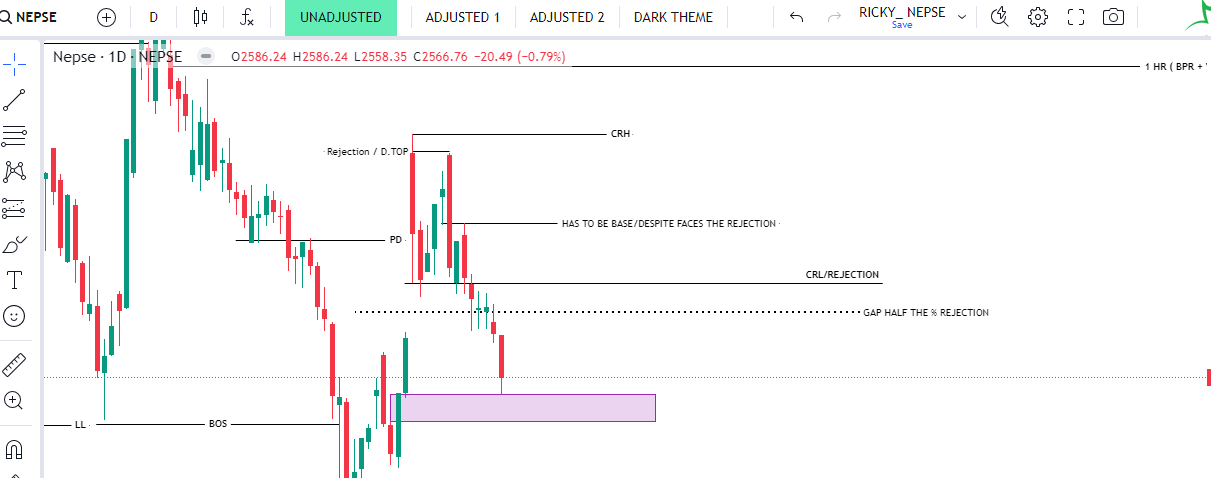
Use technical analysis carefully: Support, resistance, volume, and momentum indicators can help organize a trading plan, but they do not guarantee future prices.
-
Manage risk: Define entry levels, exit conditions, and position sizes according to your financial circumstances and risk tolerance.
Investors seeking structured guidance can explore share market training in Nepal and complete share market learning courses .
Conclusion: A Five-Point Roadmap for Capital Market Reform
The Finance Committee’s five directives address important structural issues in Nepal’s capital market, from the need for updated securities legislation to stronger IPO screening, reliable trading infrastructure, effective market surveillance, and transparent institutional leadership.
If implemented effectively, these measures could support a more accountable, transparent, and technologically reliable stock market.
For now, investors should follow the implementation process rather than assume that the directives have already resulted in regulatory changes or improved market performance. The next steps taken by the Ministry of Finance, SEBON, NEPSE, and CDSC will be important in determining how these proposals translate into practical reforms.
Frequently Asked Questions (FAQ)
1. What are the five directives issued by Nepal’s Finance Committee?
The five directives concern a new securities bill, mandatory IPO grading, NEPSE restructuring and trading-system upgrades, stronger action against market manipulation, and transparent CEO appointments at NEPSE and CDSC.
2. Why has the Finance Committee called for a new securities bill?
The committee has called for legislation that clearly defines the roles, responsibilities, and accountability of SEBON, NEPSE, and CDSC, with the broader objective of strengthening market transparency and investor protection.
3. Will IPO companies in Nepal face stricter screening?
The committee has directed the relevant authorities to introduce mandatory grading and prioritization based on financial strength, net worth, technological capacity, balance-sheet position, and other relevant indicators. The details will depend on the resulting rules and procedures.
4. What is the purpose of upgrading NEPSE’s trading system?
The proposed upgrades aim to address trading and data-system disruptions, improve reliability, strengthen cybersecurity, and support a more efficient trading environment.
5. What is market manipulation in the NEPSE secondary market?
Market manipulation involves activities intended to create misleading prices, trading volumes, or market signals. The committee specifically highlighted cornering, circular trading, and pump-and-dump schemes.
6. Have the NEPSE and CDSC CEO vacancies been filled?
The report states that the committee directed the Ministry of Finance to proceed with open and transparent appointments. The directive itself does not confirm that appointments have been completed.
7. Will these reforms cause the NEPSE index to rise?
Not necessarily. Regulatory reforms may influence market confidence and operations, but the direction of the NEPSE index also depends on earnings, valuations, liquidity, economic conditions, and investor sentiment.
8. Where can beginners learn about Nepal’s stock market?
Beginners can explore structured courses covering IPOs, fundamental analysis, technical analysis, risk management, and NEPSE trading through Sarbaguna’s stock market training programs .
Learn Nepal’s Stock Market with Sarbaguna
Build your understanding of NEPSE, IPOs, fundamental analysis, technical analysis, market psychology, and risk management through practical stock market education in Nepal.
Explore our programs:
Contact Deep Thapa
Call or WhatsApp for stock market classes, training details, and Sarbaguna services.
9849290806
Tags


Leave a Comments
Comments

Popular






Recent Post

No comments yet.