

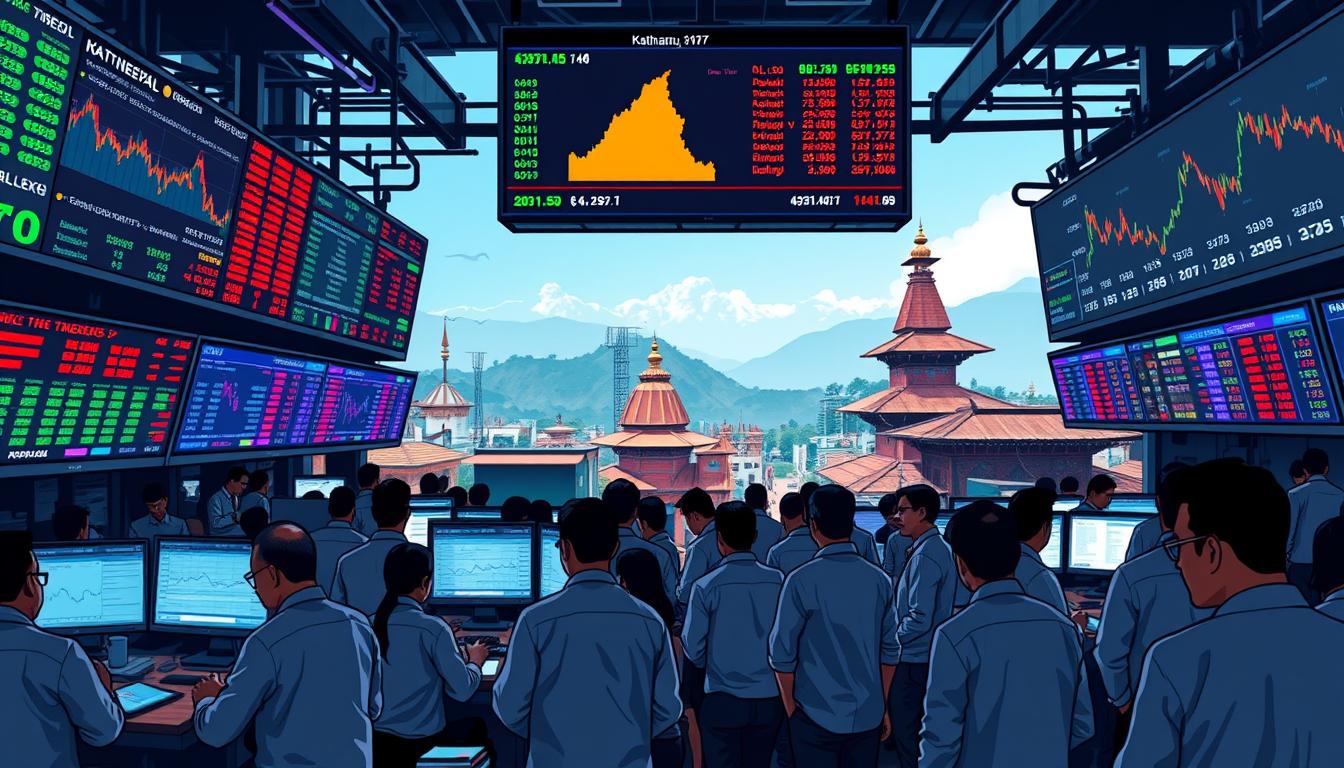
Basics of share market Nepal
What is a Share / Stock
- A share represents ownership in a company and gives you a claim on its assets and earnings.
- In Nepal, the par value of a share is typically NPR 100, though there are shares with par value of NPR 10.
Markets: Primary vs Secondary
- Primary Market: Where companies issue shares to the public for the first time (IPOs).
- Secondary Market: Where already issued shares are traded between investors.
Key Players & Institutions
- The Nepal Stock Exchange Ltd. (NEPSE) is the marketplace for shares in Nepal.
- It’s governed by the Securities Board of Nepal (SEBON).
- To trade, you’ll need:
- A bank account
- A Demat account (for holding shares electronically)
- A broker account
How Stock Prices are Determined
- The usual supply-and-demand model applies: price goes up if demand > supply, and vice versa.
- Investor perceptions (what people believe will happen), hype, and expectations also play big roles in price movement.
Types of Analysis
- Fundamental Analysis: Examining a company’s financials (balance sheet, dividends, earnings per share, PE ratios, etc.), its management, and its long-term prospects.
- Technical Analysis: Analyzing past price patterns, chart formations, indicators like moving averages, etc., to forecast future price movements. Fundaments are less important here.
Current Situation & Trends in Nepal
- There are over 3.5 million (35 lakh) Demat accounts. Around 60% of those are involved in the primary market.
- About 600,000 (6 lakh) investors are active in the secondary market.
- Nepal’s share market is in a growth phase. Even during crises (e.g. the pandemic), the share market’s index and volume have shown resilience.
- In earlier times, political statements had a big effect on market behavior; more recently, the market has become less sensitive to politics, though political influence still exists.
- Some improvements in infrastructure: e.g. introduction of online systems (TMS), T+2 settlement (trade plus two days settlement) are happening.
Roles & Responsibilities
- Distinction between investors (long-term) and traders (short-term). Both are present in Nepal; currently, traders may be more dominant.
- Risks increase if people act based on hype or social media rather than their own analysis.
- Governing bodies (NEPSE, SEBON) need to be more proactive, providing oversight and ensuring transparency.
Wise Approach & Mindset
- The market doesn’t move in one direction forever: cycles of bull (rising) and bear (falling) markets alternate.
- It’s important to make investment decisions based on your own knowledge, research, and risk tolerance, rather than following others blindly.
Key Takeaways / Advice for Beginners
- Educate yourself: Learn both fundamental and technical analysis so you can choose investment approach(s) that suit you.
- Have the proper accounts: Bank, Demat, and Broker — these are basic requirements.
- Don’t get swayed by hype: Personal research is critical. Social media may exaggerate.
- Think long-term vs short-term: Decide whether you are an investor or a trader (or both) and plan accordingly.
- Be ready for volatility: Market ups and downs are normal; don’t panic.
- Watch governance and regulation: Keep track of what SEBON & NEPSE are doing; better regulation tends to make markets safer.
- Use modern systems & tools: Online trading, T+2 settlement, etc., make things smoother; learn to use them.
- Basics of share market Nepal
For Share Market Training, Call Now: Deep Thapa, 9849290806


Leave a Comments
Comments



Popular



Recent Post
Share marketing training
Join us call 9849290806
Fundamental Analysis: Examining a company’s financials (balance sheet, dividends, earnings per share, PE ratios, etc.), its management, and its long-term prospects.
I will join and training this share
I will my mind test
Nothing