

HALT Trading Psychology: Avoid Emotional Share Market Decisions in Nepal
HALT in Trading: How Hunger, Anger, Loneliness and Tiredness Can Affect Your Share Market Decisions
What Is HALT in Trading Psychology?
Successful trading is not only about NEPSE analysis, technical indicators, charts and stock selection. Your physical and emotional condition can also significantly influence the decisions you make in the share market.
The HALT method is a simple self-checking technique that asks four questions before you react emotionally:
- H – Hungry
- A – Angry
- L – Lonely
- T – Tired
Before placing a buy or sell order, ask yourself: “Am I HALT?”
This simple pause can help investors recognize whether their decision is based on proper market analysis or temporary emotions and physical exhaustion.
H – Hungry: Is Hunger Affecting Your Trading Decision?
When you are hungry, your concentration and patience may be affected. In an active market, this can result in impulsive decisions.
For example, a trader may see a stock suddenly moving upward and enter a position without properly checking:
- Support and resistance
- Volume
- RSI
- Moving averages
- Market trend
- Risk-to-reward ratio
- Overall NEPSE sentiment
Instead of immediately reacting, take a short break.
Ask yourself:
“When was the last time I ate or drank enough water?”
If you are hungry or dehydrated, take care of yourself first and then return to the market.
Trading Tip
Do not allow physical discomfort to become a reason for an emotional trade. A few minutes away from the screen can be more valuable than an impulsive entry.
A – Angry: Are You Trading Because You Are Angry?
Anger is one of the biggest enemies of trading discipline.
A trader may lose money on a stock and immediately try to recover the loss by taking another risky position. This is commonly associated with revenge trading.
For example:
Loss → Anger → Impulsive trade → Bigger loss → More anger
This cycle can damage both capital and confidence.
Before making your next trade, ask:
- Why am I angry?
- Am I trying to recover a previous loss?
- Am I trading because of fear of missing out?
- Am I stressed or overwhelmed?
- Am I making a decision based on my trading plan?
If your answer suggests that emotion is controlling your decision, consider stepping away from the market.
Trading Tip
A previous loss is not a reason to take another trade.
Your next position should be based on your strategy, not your desire to recover money quickly.
L – Lonely: Are You Making Decisions Without Enough Perspective?
Trading can sometimes become an isolated activity. Spending hours looking at charts, floorsheets and market prices without discussing your ideas with trusted people can increase emotional pressure.
This does not mean that traders should follow other people's buy and sell calls blindly.
Instead, having a healthy trading environment can help you:
- Discuss your trading plan
- Review mistakes
- Understand different market perspectives
- Reduce emotional pressure
- Improve accountability
- Learn from experienced traders
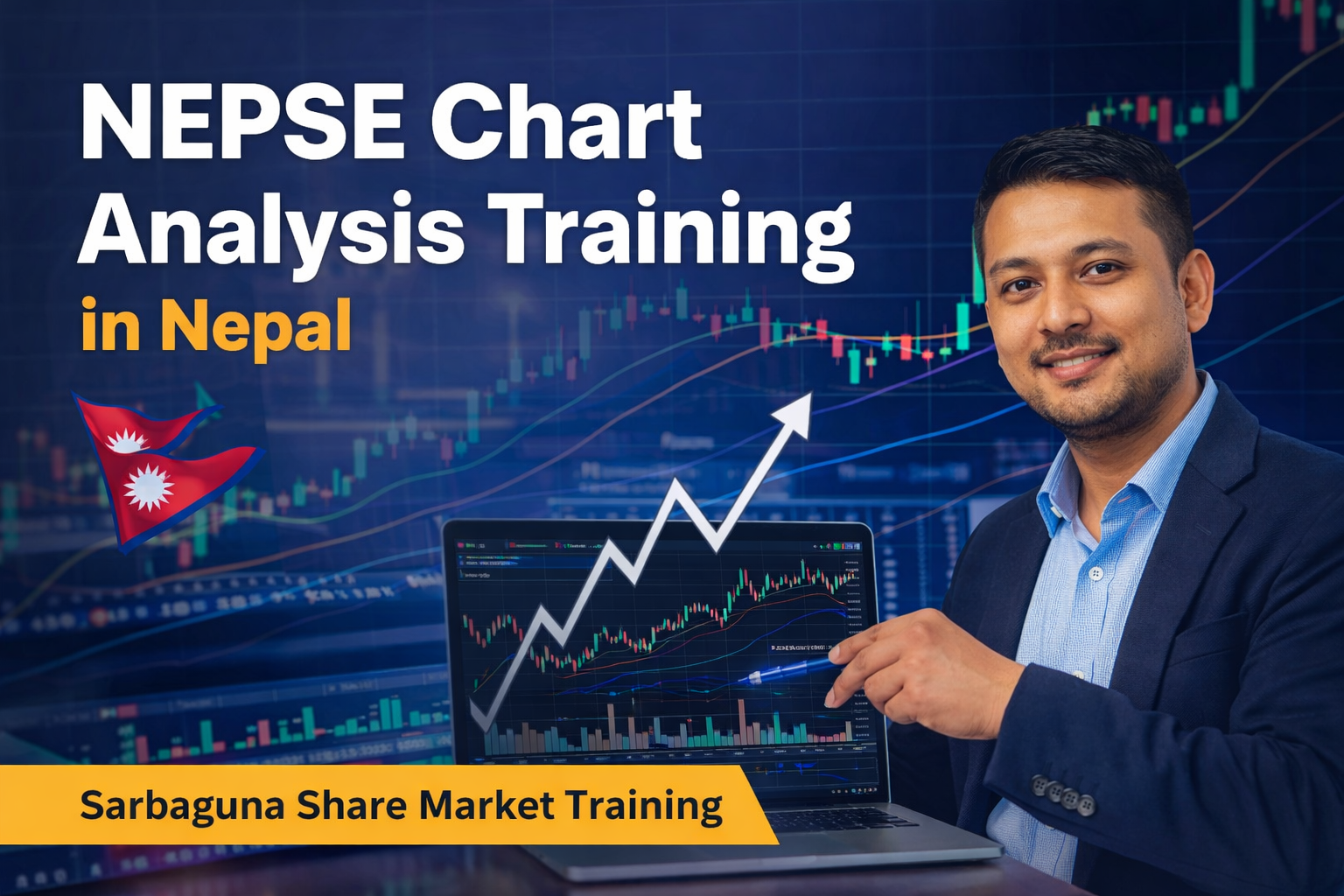
For investors interested in developing their knowledge, structured share market training in Nepal can also provide a more disciplined learning environment.
You can explore Sarbaguna's share market and trading education resources to learn more about Nepal’s stock market, trading concepts and market analysis.
Trading Tip
Do not confuse independent thinking with isolated decision-making. Learn from others, but always make your final investment decision based on your own research and risk management.
T – Tired: Are You Trading While Mentally Exhausted?
Fatigue can reduce concentration and decision-making quality.
If you have had very little sleep or spent many hours continuously watching the market, you may be more likely to:
- Enter trades without confirmation
- Miss important support or resistance levels
- Misread candlestick patterns
- Ignore your stop-loss
- Overtrade
- Exit positions emotionally
- Chase rapidly rising stocks
Before trading, ask yourself:
“How many hours of sleep did I get last night?”
If you are exhausted, consider taking a break.
Trading Tip
The market will still be there tomorrow. You do not need to participate in every market movement.
Why HALT Matters for NEPSE Traders
The Nepal Stock Exchange (NEPSE) can move quickly, particularly when market sentiment changes or specific sectors experience strong buying or selling pressure.
Technical analysis can help traders identify potential opportunities, but analysis alone cannot eliminate emotional decisions.
A disciplined trader should consider both:
Market Analysis + Trading Psychology
For example, a technically attractive setup can still become a poor trade if you enter because you are angry about a previous loss or afraid of missing a rally.
HALT provides a simple mental checkpoint before taking action.
HALT Checklist Before Buying or Selling a Stock
Before placing your next order, ask:
H – Hungry?
Have I eaten and had enough water?
A – Angry?
Am I frustrated, stressed or trying to recover a previous loss?
L – Lonely?
Am I isolated and making decisions without reviewing my plan or getting a healthy second perspective?
T – Tired?
Am I physically or mentally exhausted?
If the answer to any of these is YES, consider pausing before taking a trade.
Combine HALT With Technical Analysis
HALT should not replace technical or fundamental analysis. Instead, it should work alongside your trading system.
A disciplined NEPSE trader can follow a process such as:
1. Check Your Mental State
Use the HALT method before opening a position.
2. Check the Market Trend
Analyze the broader NEPSE trend and relevant sector movement.
3. Analyze the Stock
Review price action, volume, RSI, MACD, moving averages and support/resistance.
4. Identify Entry and Exit Levels
Define your potential entry, target and invalidation level before entering.
5. Manage Risk
Decide how much capital you are willing to risk.
6. Execute Without Emotion
Once your trading plan is established, avoid changing it simply because the market moves against you temporarily.
HALT and the Importance of Trading Discipline
Many new investors focus heavily on finding the best stock to buy in Nepal.
However, identifying a good stock is only one part of successful investing.
A complete trading process includes:
- Stock selection
- NEPSE analysis
- Technical analysis
- Fundamental research
- Entry strategy
- Exit strategy
- Position sizing
- Risk management
- Trading psychology
- Emotional discipline
This is why learning share market trading in Nepal should go beyond simply learning candlestick patterns or indicators.
A strong trader understands both the market and their own behavior.
HALT for Long-Term Investors
HALT is not only useful for short-term traders.
Long-term investors can also use it before making decisions such as:
- Panic selling during a market correction
- Buying a stock because everyone else is buying
- Increasing exposure after a large rally
- Selling fundamentally strong stocks because of temporary fear
- Making decisions after reading an emotional social media post
When the market becomes volatile, taking a moment to assess your emotional state can prevent unnecessary decisions.
Learn Share Market Training in Nepal
If you want to improve your understanding of the Nepalese stock market, structured education can help you develop a systematic approach to investing and trading.
A quality share market training program in Nepal can cover areas such as:
- NEPSE technical analysis
- Candlestick patterns
- Chart patterns
- Support and resistance
- RSI and MACD
- Moving averages
- Volume analysis
- Pivot levels
- Risk management
- Trading psychology
- Entry and exit strategies
- Portfolio management
For investors searching for share market training Nepal, NEPSE analysis course Nepal, stock market training Kathmandu, technical analysis training Nepal and related learning resources, visit Sarbaguna.com.
For training and related information, contact Deep Thapa via WhatsApp: 9849290806.
Frequently Asked Questions (FAQ)
What does HALT stand for in trading?
HALT stands for Hungry, Angry, Lonely and Tired. It is a self-checking method that helps traders identify physical or emotional conditions that may influence their decisions.
How can HALT help stock market traders?
HALT encourages traders to pause before making impulsive decisions. It can help identify whether hunger, anger, isolation or fatigue is affecting trading judgment.
Is HALT a technical analysis strategy?
No. HALT is a trading psychology and self-awareness technique. It complements technical analysis rather than replacing it.
Can HALT help NEPSE investors?
Yes. NEPSE investors can use HALT before buying or selling shares, especially during periods of high volatility or emotional market movements.
What is revenge trading?
Revenge trading occurs when a trader takes a new position primarily to recover a previous loss quickly. Anger and frustration can contribute to this behavior.
Why is trading psychology important?
Trading psychology affects discipline, patience, risk management and decision-making. A trader can have a good strategy but still experience poor results if emotions consistently override the strategy.
Should I trade when I am tired?
Trading while extremely tired may reduce concentration and decision-making quality. If you are exhausted, taking a break may be more sensible than forcing a trade.
Does share market training teach trading psychology?
A comprehensive share market training program can include trading psychology, risk management and emotional discipline alongside technical and fundamental analysis.
Where can I learn share market trading in Nepal?
Investors looking for share market training in Nepal and NEPSE-related education can explore Sarbaguna.com or contact Deep Thapa on WhatsApp at 9849290806 for training-related information.
Final Takeaway: Pause Before You Trade
The next time you feel the urge to immediately buy or sell a stock, stop for a few seconds and ask:
Am I Hungry?
Am I Angry?
Am I Lonely?
Am I Tired?
Sometimes the biggest improvement in trading does not come from adding another indicator to your chart.
It comes from learning when not to trade.
Use HALT as a simple checkpoint, combine it with proper NEPSE analysis, technical analysis, risk management and a defined trading plan, and work toward becoming a more disciplined market participant.
Learn. Analyze. Plan. Then Trade.
For share market training in Nepal, NEPSE analysis, technical analysis and trading education, visit Sarbaguna.com.
Training Contact: Deep Thapa
WhatsApp: 9849290806
Disclaimer: This article is for educational and informational purposes only and should not be considered financial or investment advice. Investors should conduct their own research and assess their risk before making investment decisions.
Tags


Leave a Comments
Comments


Popular





Recent Post

No comments yet.