

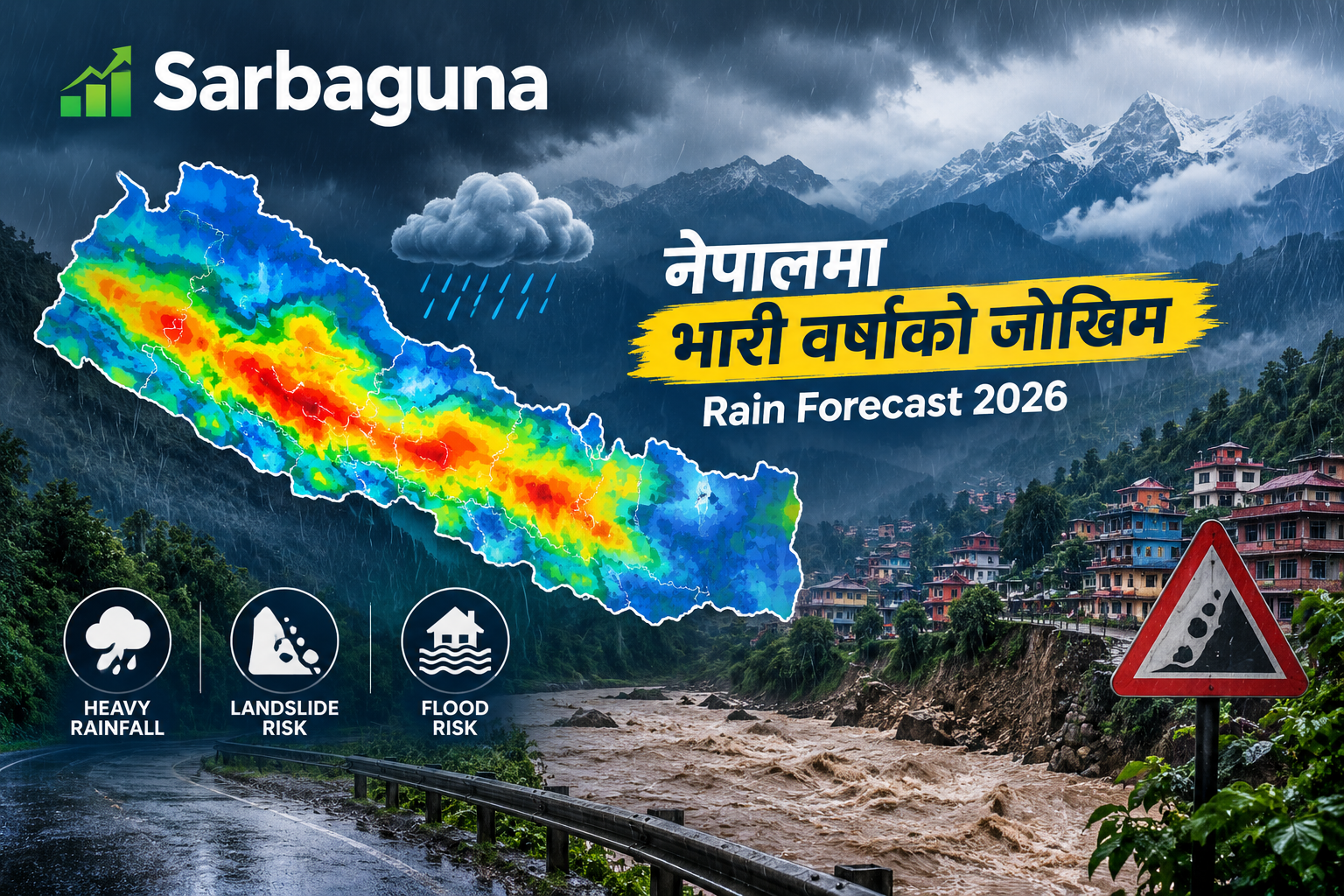
Nepal Rain Forecast: 29 Districts at Risk of Heavy Rainfall
Rain Forecast in Nepal: 29 Districts Face Higher Risk of Heavy Rainfall
Nepal Weather Update: 29 Districts Face Potential Heavy Rainfall Risk
Kathmandu, October 29, 2026: Several parts of Nepal are facing the risk of heavy rainfall as a weather system originating over the Bay of Bengal affects the country. Preliminary forecasts have identified 29 districts as potentially vulnerable to adverse weather, raising concerns about flooding, landslides, snowfall and disruptions to travel and agricultural activities.
The weather system, associated with the remnants of Cyclone Arnab, is expected to bring rain and snowfall to different parts of Nepal through October 31. Some locations could experience heavy precipitation, although the exact intensity and distribution may change as the system develops.
Meteorologists have warned that moisture-laden air from the Bay of Bengal, combined with upper-atmospheric conditions and westerly winds, could increase the likelihood of rainfall in several provinces.
Residents, farmers, trekkers and travellers are advised to monitor official weather bulletins and take appropriate precautions.
Which Provinces in Nepal Are at Higher Risk?
The preliminary assessment indicates that Koshi, Madhesh, Bagmati, Gandaki and Lumbini provinces could experience relatively greater impacts from the approaching weather system.
Karnali and Sudurpashchim provinces may also receive rain, snowfall or hail in some locations. The extent of the impact will depend on the system's movement and local weather conditions.
A preliminary risk assessment published earlier indicated that some locations could receive more than 150 millimetres of rainfall between October 29 and November 1. However, this was an early estimate rather than a confirmed rainfall total for every district.
The districts and locations most at risk may change as meteorologists receive new information.
Heavy Rainfall Could Trigger Floods and Landslides
The expected rainfall has raised concerns about possible natural hazards across Nepal's diverse geographical regions.
- Tarai and Madhesh: Heavy rainfall could increase water levels in rivers and streams, creating flood risks in vulnerable settlements.
- Hilly regions: Saturated soil and intense rainfall could trigger landslides, debris flows and road blockages.
- Himalayan districts: Rain, heavy snowfall and adverse mountain conditions could create additional risks for trekkers and local communities.
- Major highways: Rainfall and landslides could disrupt road travel, particularly along routes passing through steep terrain.
People living near rivers, flood-prone settlements and landslide-sensitive slopes should remain alert. Travellers should check road conditions before departure and avoid crossing flooded roads or streams.
Why Is Nepal Likely to Receive More Rain?
Meteorologists have identified the interaction of several weather factors as a possible cause of the unsettled conditions.
The remnants of Cyclone Arnab are carrying moisture from the Bay of Bengal towards the region. This moisture could interact with upper-level atmospheric systems and prevailing westerly winds, increasing the possibility of rainfall over Nepal.
The northeast monsoon over southern India and associated low-pressure conditions may also influence the broader weather pattern.
Although the cyclone has weakened, its remaining moisture and interaction with other atmospheric systems may continue to affect Nepal. A weakening cyclone does not necessarily mean that all associated weather risks disappear immediately.
Farmers Advised to Protect Paddy Crops
The anticipated rainfall could create difficulties for farmers who are harvesting paddy or drying harvested crops.
Farmers are advised to take practical steps to reduce potential losses:
- Complete harvesting only when local weather and field conditions allow.
- Move harvested paddy to a covered and dry location.
- Protect crops spread out for drying from rain and excess moisture.
- Secure agricultural equipment and store grain away from flood-prone areas.
- Follow local weather alerts before scheduling outdoor agricultural work.
Wet harvested grain may be difficult to dry and store safely. Timely precautions could help limit crop damage and post-harvest losses.
Trekkers and Long-Distance Travellers Urged to Exercise Caution
The weather system may affect trekking routes, mountain tourism and road transportation. High-altitude areas could experience heavy snowfall, snowstorms and avalanches, making travel particularly dangerous.
Trekkers should consider postponing trips to exposed high-mountain destinations until conditions improve. Those already in the mountains should follow local authorities' instructions and move to safer locations if advised.
Long-distance travellers should check updated forecasts and road conditions before leaving. Particular caution is recommended on highways vulnerable to landslides, including the Prithvi Highway and BP Highway.
Air travel and mountain transport may also face disruption if visibility or weather conditions deteriorate.
What Should People Do During the Rainfall Alert?
Residents and travellers can reduce their exposure to weather-related hazards by following a few basic precautions.
- Check the latest forecasts and warnings issued by Nepal's Department of Hydrology and Meteorology.
- Avoid unnecessary journeys during periods of heavy rain.
- Stay away from swollen rivers, streams and landslide-prone slopes.
- Keep essential medicines, drinking water, a torch and emergency supplies accessible.
- Protect crops, livestock and important documents from possible flooding.
- Follow instructions issued by local authorities and disaster management agencies.
Forecasts can change quickly, so people should rely on updated official information rather than assuming that an earlier prediction remains unchanged.
Conclusion
The Nepal rain forecast highlights the possibility of heavy rainfall and related hazards in several provinces during the October 29–31 period, with earlier assessments extending the potential risk window to November 1. Flooding in low-lying areas, landslides in the hills and snowfall in the Himalayas remain important concerns.
Farmers, tourists, trekkers and road users should take sensible precautions and follow official weather updates. The actual impact will depend on the movement of the weather system and the amount of precipitation received in each location.
For the latest information, visit the official website of the Department of Hydrology and Meteorology.
Frequently Asked Questions (FAQ)
1. What is the latest Nepal rain forecast for October 2026?
Forecasts indicate that rain and snowfall may affect several parts of Nepal through October 31, 2026. Some locations could experience heavy precipitation. Conditions and warnings may change as the weather system develops.
2. Which provinces are most likely to be affected by heavy rainfall?
Koshi, Madhesh, Bagmati, Gandaki and Lumbini provinces have been identified as areas of concern. Parts of Karnali and Sudurpashchim may also experience rainfall, snowfall or hail.
3. How many districts are at higher risk of heavy rainfall?
An earlier preliminary assessment identified 29 districts as potentially facing a higher risk. This estimate is subject to change and should not be interpreted as a final official list of districts that will receive heavy rainfall.
4. Could the rainfall cause floods and landslides in Nepal?
Yes. Heavy rainfall can raise river levels and trigger flooding in vulnerable lowland areas. In hilly regions, saturated ground and intense precipitation can increase the risk of landslides and debris flows.
5. Is it safe to go trekking in Nepal during this weather?
Trekking in high-altitude areas may be dangerous when heavy snowfall, snowstorms or avalanches are possible. Travellers should check official forecasts, consult local authorities and postpone exposed mountain trips when warnings are in effect.
6. What should farmers do to protect paddy crops?
Farmers should monitor local forecasts, protect harvested paddy from rain, move drying crops under cover where possible and avoid harvesting during unsafe weather conditions.
7. Where can I check official weather updates in Nepal?
Visit the Department of Hydrology and Meteorology at dhm.gov.np for official forecasts, weather bulletins and relevant warnings.
Related Learning Opportunity
Technical Analysis Course in Nepal
Learn about stock market trends, chart patterns, support and resistance, RSI, MACD and other technical indicators through a structured Technical Analysis Course in Nepal.
For information about stock market training, contact Deep Thapa.
Call / WhatsApp: 9849290806
Explore Sarbaguna for stock market education, NEPSE analysis and investment learning resources.


Leave a Comments
Comments



Popular






No comments yet.