

Nepal Share Market Guide: NEPSE, Investing & Share Market Training Nepal
Nepal Share Market Guide 2026: NEPSE, Investing and Share Market Training Nepal
The Nepal share market has become an important part of Nepal's financial ecosystem, providing individuals with opportunities to participate in listed companies through the Nepal Stock Exchange (NEPSE).
However, investing in shares is not simply about finding a stock that may go up. Successful participation requires an understanding of NEPSE, DEMAT accounts, Mero Share, TMS, fundamental analysis, technical analysis, risk management and investor psychology.
For beginners searching for Share Market Training Nepal, the first step should be learning how the market works before putting capital at risk.
At Sarbaguna, the focus is on practical stock market education that helps learners understand the market, analyze companies and develop disciplined investment and trading habits.
What Is the Nepal Share Market?
The Nepal share market is the marketplace where investors can buy and sell shares of publicly listed companies.
The Nepal Stock Exchange (NEPSE) is Nepal's stock exchange, while the Securities Board of Nepal (SEBON) plays an important regulatory and investor-education role. SEBON itself emphasizes investor education, financial literacy and helping investors understand and manage investment risks.
Companies from sectors such as:
- Commercial banking
- Development banking
- Hydropower
- Finance
- Microfinance
- Insurance
- Manufacturing
- Hotels and tourism
- Investment
- Others
can be represented in Nepal's listed equity market.
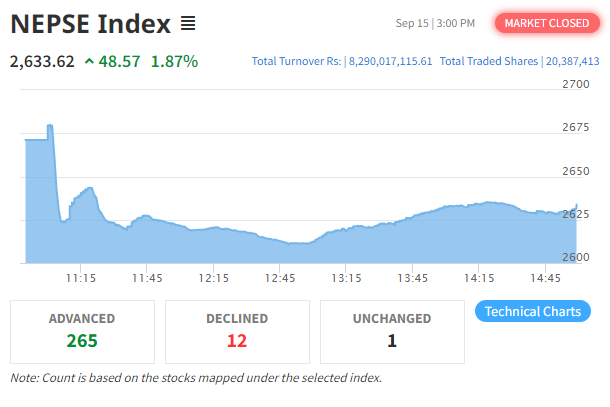
The NEPSE Index is commonly followed by investors and traders as a broad indicator of market performance.
How Does NEPSE Work?
A beginner should understand the basic journey of a share transaction:
Investor → Broker/TMS → NEPSE → Buy/Sell Order → Settlement → DEMAT
To participate effectively in the secondary market, investors generally need to understand their DEMAT account, Mero Share, broker account and TMS trading platform.
Learning these systems is one of the first topics covered in practical Share Market Training Nepal.
How to Start Investing in the Nepal Share Market
If you are completely new to the stock market, follow a structured learning process.
Step 1: Learn the Basics
Understand:
- What is a share?
- What is NEPSE?
- What is an IPO?
- What is a secondary market?
- What is DEMAT?
- What is Mero Share?
- What is TMS?
- What is a broker?
- How are shares bought and sold?
Step 2: Open the Required Accounts
A new investor needs to understand the role of the DEMAT account, Mero Share and broker/TMS account before participating in the market.
Step 3: Learn Fundamental Analysis
Fundamental analysis focuses on the underlying financial condition and business prospects of a company.
Important areas include:
- Earnings per share (EPS)
- P/E ratio
- Net worth/book value
- Revenue
- Profit growth
- Dividend history
- Debt
- Return on equity
- Cash flow
- Sector performance
- Management quality
The objective is not simply to find a company with a low share price. A low-priced share is not automatically undervalued.
What Is Technical Analysis in NEPSE?
Technical analysis studies price, volume and market behaviour to identify possible trends and trading opportunities.
Common technical-analysis concepts include:
- Candlestick patterns
- Support and resistance
- Trendlines
- Moving averages
- RSI
- MACD
- Volume analysis
- Breakouts
- Chart patterns
- Price action
- Momentum
- Market structure
For active traders, technical analysis can become an important part of developing a trading plan.
However, technical analysis should not be treated as a guarantee of future price movement.
Fundamental Analysis vs Technical Analysis
Both approaches can serve different purposes.
| Fundamental Analysis | Technical Analysis |
|---|---|
| Studies company fundamentals | Studies price and volume |
| Useful for investment research | Commonly used for trading |
| Examines earnings and financials | Examines charts and market structure |
| Considers valuation | Considers momentum and price behaviour |
| Often useful for longer-term decisions | Often useful for shorter- and medium-term decisions |
A strong investor can learn both rather than relying entirely on one method.
Why Risk Management Matters in the Nepal Share Market
One of the biggest mistakes beginners make is focusing only on potential profit.
Professional market participation also requires understanding risk.
Important risk-management concepts include:
- Position sizing
- Capital allocation
- Diversification
- Stop-loss planning
- Risk/reward ratio
- Portfolio management
- Avoiding excessive leverage
- Maintaining trading discipline
No stock market course can legitimately guarantee profits. The objective of training should be to improve knowledge, analytical ability and decision-making.
Trading Psychology: The Missing Skill
Even a good strategy can fail when emotions control decisions.
Common psychological problems include:
- Fear
- Greed
- FOMO
- Revenge trading
- Overtrading
- Panic selling
- Holding losing positions without a plan
- Following social-media rumours
A disciplined trader understands that not every market movement requires a trade.
Learning to wait for a suitable setup can be just as important as knowing when to enter.
Why Choose Share Market Training Nepal?
Searching for Share Market Training Nepal should not be limited to finding someone who provides stock tips.
A useful training program should teach you how to think independently.
A practical share market course can help you learn:
1. Nepal Stock Market Basics
Understand the structure of Nepal's capital market and the role of NEPSE, SEBON, brokers and other market participants.
2. DEMAT, Mero Share and TMS
Learn the basic systems used by investors to participate in the Nepalese share market.
3. Fundamental Analysis
Learn how to read company information and evaluate financial performance.
4. Technical Analysis
Understand charts, candlesticks, support, resistance, indicators and price action.
5. Trading Strategies
Learn how entry, exit, position sizing and risk management can fit into a structured trading plan.
6. Portfolio Management
Understand how different investments can be evaluated and managed according to your objectives and risk tolerance.
7. Trading Psychology
Learn how emotional decisions can affect trading performance.
Sarbaguna Share Market Training Nepal
If you are looking for Share Market Training Nepal, NEPSE trading training, technical analysis training or stock market classes in Kathmandu, Sarbaguna provides Nepal-focused market education.
Sarbaguna's training resources cover areas including:
- Stock market basics
- NEPSE analysis
- Fundamental analysis
- Technical analysis
- Candlestick analysis
- Price action
- Support and resistance
- Trading strategies
- Risk management
- Trading psychology
- Portfolio management
The objective is simple:
Learn → Analyze → Plan → Manage Risk → Execute → Review
Sarbaguna's existing training programs are structured for beginners, investors and traders who want practical knowledge of Nepal's stock market.
Learn More About Share Market Training
Explore Share Market Training Nepal at:
Sarbaguna Share Market Training Nepal
You can also explore Share Market Training in Kathmandu, technical-analysis education and beginner investment resources on Sarbaguna.
Who Should Join Share Market Training?
Share market education can be useful for:
- Complete beginners
- College and university students
- Working professionals
- New investors
- Active traders
- Long-term investors
- Entrepreneurs
- People interested in financial markets
- Investors wanting to improve technical analysis
- Traders wanting a more systematic approach
You do not need to become a full-time trader to benefit from understanding the stock market.
Financial literacy can help investors make more informed decisions and better understand risk.
Is Nepal Share Market Suitable for Beginners?
Yes, beginners can participate in the Nepal share market, but they should start with education rather than speculation.
A sensible learning path is:
Understand the market → Learn analysis → Practice → Manage risk → Invest gradually → Review your decisions
Avoid making investment decisions solely because a friend, social-media page, Facebook group or messaging group says a particular share will rise.
Common Mistakes Made by New NEPSE Investors
Buying Based on Rumours
Market rumours can spread rapidly. Always verify information before making an investment decision.
Chasing a Rising Stock
A stock that has already risen significantly may not automatically be a good entry.
Ignoring Financial Statements
Price charts alone cannot tell you everything about a company.
No Exit Plan
Before entering a trade, understand your potential risk and what would invalidate your original idea.
Overtrading
More trades do not necessarily mean more profit.
Investing Without Risk Management
Capital protection should always be part of a trading or investment plan.
How Sarbaguna Can Help You Learn the Stock Market
Sarbaguna focuses on practical stock market training in Nepal, combining market concepts with technical and fundamental analysis.
If your goal is to understand NEPSE trading, read charts, evaluate companies and develop better market discipline, structured education can provide a stronger foundation than simply following stock tips.
Learn the market. Analyze with knowledge. Invest with discipline.
Contact Sarbaguna
Trainer: Deep Thapa
Call / WhatsApp: 9849290806
Website: Sarbaguna.com
For course information, Share Market Training Nepal, NEPSE training and technical-analysis learning, contact Deep Thapa directly.
Frequently Asked Questions About Nepal Share Market
What is the Nepal share market?
The Nepal share market is the market where investors buy and sell shares of publicly listed companies, primarily through the Nepal Stock Exchange (NEPSE).
What is NEPSE?
NEPSE stands for Nepal Stock Exchange. It is Nepal's stock exchange where listed securities are traded.
How can I start investing in NEPSE?
Beginners should first understand DEMAT, Mero Share, broker accounts and TMS, then learn basic fundamental and technical analysis before investing.
What is Share Market Training Nepal?
Share Market Training Nepal refers to educational programs that teach people about Nepal's stock market, NEPSE, investing, trading, fundamental analysis, technical analysis and risk management.
Is Share Market Training useful for beginners?
Yes. Structured training can help beginners understand market terminology, trading platforms, stock analysis and risk management before making independent decisions.
What is taught in a NEPSE technical analysis course?
A technical analysis course may cover candlestick patterns, price action, support and resistance, trend analysis, volume, RSI, MACD, moving averages, chart patterns and trade management.
Can I learn fundamental analysis in Nepal?
Yes. Fundamental analysis can be learned using Nepalese listed-company financial information, including EPS, P/E, book value, profitability, debt, cash flow and other relevant factors.
Does stock market training guarantee profit?
No. No legitimate stock market training program can guarantee investment or trading profits. The stock market involves risk, and education is intended to improve knowledge and decision-making.
Where can I get Share Market Training in Kathmandu?
Sarbaguna provides share market training and stock-market education in Kathmandu, covering beginner and advanced market concepts.
How can I contact Sarbaguna for share market training?
Contact Deep Thapa at 9849290806 by Call or WhatsApp for information about Share Market Training Nepal and available programs.
Final Thoughts
The Nepal share market offers opportunities, but opportunity without knowledge can also create significant risk.
Instead of asking only “Which share should I buy?”, investors should learn to ask:
Why am I buying?
What is the company's financial condition?
What does the chart indicate?
What is my risk?
What is my investment timeframe?
When would my original thesis be wrong?
These questions form the foundation of disciplined investing.
If you want to learn NEPSE, technical analysis, fundamental analysis and practical stock market investing, start with education and build your skills step by step.
Sarbaguna – Learn. Analyze. Invest. Grow.
Deep Thapa | Call / WhatsApp: 9849290806
Disclaimer
This content is for educational and informational purposes only and should not be considered personalized investment advice, a recommendation to buy or sell securities, or a guarantee of returns. Investing and trading in the stock market involve financial risk. Investors should conduct their own research and consider their financial objectives and risk tolerance before making investment decisions.


Leave a Comments
Comments

Popular





Recent Post
No comments yet.