

NEPSE Reform Stalls as SEBON Directives Remain Unimplemented
NEPSE Reform Stalls as Regulatory Directives Remain Unimplemented
Nepal's capital market is facing renewed concerns over the slow implementation of regulatory directives intended to improve NEPSE trading, investor protection, market technology and transparency.
Although the Securities Board of Nepal (SEBON) has issued a series of instructions to the Nepal Stock Exchange (NEPSE), several important reforms have reportedly remained pending for weeks or months. The delays have raised questions about whether regulatory directives are translating into actual improvements for investors and the secondary market.
The concerns are particularly significant as Nepal's stock market continues to expand, with millions of Demat accounts and billions of rupees in daily capital-market activity.
SEBON Directives Yet to Produce Major Market Changes
SEBON has issued multiple instructions covering areas such as market surveillance, trading technology, circuit breakers, broker TMS systems, short selling and closing-price mechanisms.
However, several initiatives have yet to reach full implementation.
One major issue involves the 15% daily circuit breaker applied to listed securities. NEPSE was reportedly asked to study whether the existing mechanism remains appropriate and submit recommendations within one week. More than a month later, the expected recommendation had still not materialized.
This has intensified the debate over whether Nepal needs a more flexible and modern stock-market circuit breaker system.
TMS Security Audit Remains a Key Concern
Another important area is the technological security of broker-operated Trading Management Systems (TMS).
SEBON had called for immediate IT audits of broker TMS platforms. The objective is to identify vulnerabilities, improve system reliability and protect investors from technology-related risks.
Modern stock exchanges depend heavily on secure and reliable trading infrastructure. Any weakness in the TMS environment can potentially affect order execution, market confidence and investor protection.
For Nepal's growing online trading ecosystem, TMS security and technology audits should therefore be treated as core market infrastructure rather than optional improvements.
Concerns Over Artificial Orders and Order Spoofing
Market participants have also raised concerns about unusual orders and potential forms of market manipulation.
One area receiving attention is the use of automated or algorithmic orders that may create artificial demand or supply. Regulators have sought stronger mechanisms to identify and control practices such as order spoofing.
Effective surveillance technology is essential because manual monitoring becomes increasingly difficult as transaction volumes and online participation grow.
A modern NEPSE market surveillance system should be capable of identifying suspicious order patterns in real time and generating alerts for further investigation.
Short Selling Infrastructure Still Needs Development
Short selling is another major area where Nepal's capital market has significant room for development.
The regulator has previously pushed for the infrastructure and operational framework necessary to introduce short selling in Nepal. However, integrating short selling into the existing trading system requires extensive technical, settlement and risk-management preparation.
A properly designed short-selling mechanism could provide investors with additional trading opportunities while improving price discovery and market liquidity.
At the same time, short selling requires strong safeguards covering:
- Margin requirements
- Securities borrowing and lending
- Risk management
- Settlement procedures
- Position limits
- Investor protection
- Market surveillance
Therefore, implementation should focus not only on launching the facility but also on establishing a robust infrastructure around it.
Closing Price Mechanism Under Scrutiny
The calculation of the closing price is another issue attracting attention.
The existing weighted-average-price approach during the final portion of the trading session has raised concerns about whether a small number of transactions can disproportionately influence the closing price.
A review of the NEPSE closing price mechanism could help reduce the possibility of price manipulation near the end of the trading session.
For investors, the closing price is important because it influences technical analysis, portfolio valuation, market statistics and the following day's trading expectations.
Leadership Gap at NEPSE Adds to the Problem
The absence of a permanent chief executive officer at NEPSE has also become part of the broader discussion.
Some market observers argue that important technical and policy-related decisions should not necessarily have to wait for a permanent CEO.
NEPSE already has experienced employees, an information-technology department, market-surveillance functions and a board capable of making institutional decisions.
However, uncertainty over accountability can make officials reluctant to take decisions involving significant policy or technical consequences.
This creates a familiar cycle:
Directive → Internal study → Administrative delay → No implementation
For investors, the result is the same: reforms announced on paper do not immediately translate into better market services.
Regulation Must Go Beyond Public Announcements
The effectiveness of a regulator should ultimately be measured not only by the number of directives it issues but also by their implementation.
Simply sending instructions to NEPSE is not enough.
SEBON needs an effective follow-up mechanism that establishes:
- Clear deadlines
- Responsible departments
- Progress reporting
- Technical evaluation
- Compliance monitoring
- Consequences for unreasonable delays
Similarly, NEPSE needs an institutional culture that encourages timely execution while maintaining accountability and risk controls.
Why NEPSE Technology Reform Matters to Investors
Nepal's capital market has changed dramatically with the growth of online trading, Demat accounts, mobile trading and digital investor services.
Investors now expect:
- Faster order execution
- Reliable TMS platforms
- Secure online trading
- Transparent market surveillance
- Better market data
- Modern trading products
- Efficient settlement
- Strong cybersecurity
The infrastructure supporting these services must therefore evolve alongside investor participation.
A modern stock market cannot depend indefinitely on manual processes, delayed studies and outdated technology.
What Should Be Done Next?
A practical roadmap for NEPSE reform in Nepal should include several immediate priorities.
1. Complete TMS IT Audits
All broker TMS platforms should undergo standardized security and performance audits, with vulnerabilities addressed promptly.
2. Strengthen Market Surveillance
NEPSE should deploy modern surveillance systems capable of identifying unusual orders, manipulation patterns and algorithmic abuse.
3. Develop Short-Selling Infrastructure
The exchange, regulator, brokers and settlement institutions should coordinate to establish the infrastructure required for secure short selling.
4. Review the Circuit Breaker System
The effectiveness of the existing circuit breaker framework should be assessed using market data and international best practices.
5. Improve the Closing Price Mechanism
The closing-price methodology should minimize opportunities for artificial price movements caused by limited transactions.
6. Establish Directive Tracking
Every major SEBON directive should have a publicly trackable implementation status, deadline and responsible institution.
7. Accelerate Digital Market Infrastructure
Nepal should prioritize secure, scalable and modern trading infrastructure capable of supporting future products and higher transaction volumes.
What This Means for NEPSE Investors
For investors, regulatory reform is not simply an institutional issue. Better market infrastructure can directly affect trading quality, transparency and confidence.
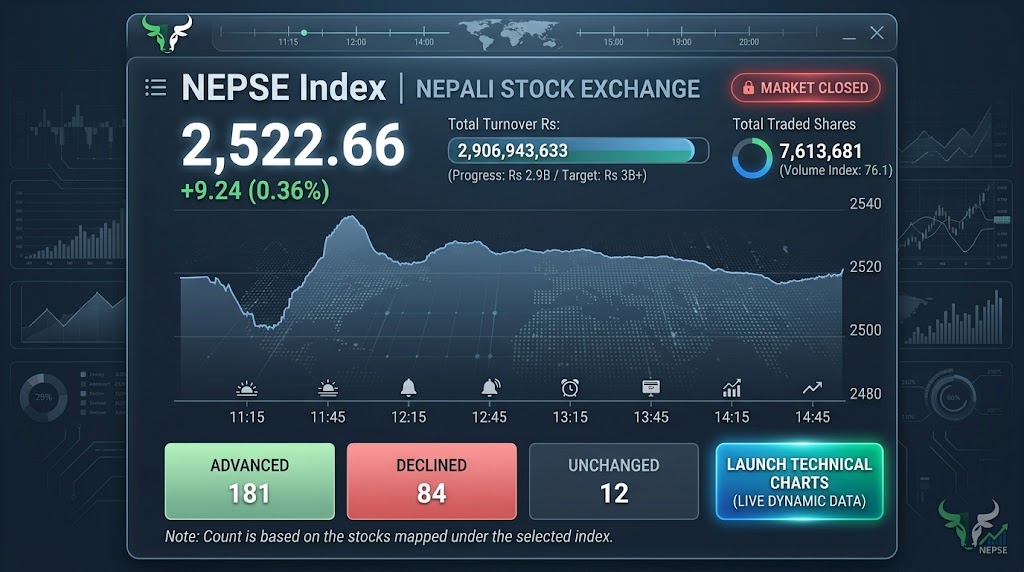
Investors should therefore monitor not only NEPSE index movements and stock prices, but also important structural developments involving TMS security, market surveillance, short selling, circuit breakers and trading-system reforms.
For investors learning technical analysis, understanding these structural factors alongside price action can provide a more complete picture of the Nepal stock market.
You can also explore share market training in Nepal to strengthen your understanding of fundamental analysis, technical analysis and NEPSE trading.
For traders interested in global financial markets, Forex Trading Course in Nepal can help develop a structured understanding of forex markets, risk management and trading strategies.
Conclusion
Nepal's capital market has reached a stage where regulatory announcements alone are no longer sufficient.
SEBON, NEPSE, brokers and other market institutions need to move from directives and discussions to measurable implementation.
TMS security, market surveillance, short selling, circuit breakers, closing-price mechanisms and digital infrastructure are all critical components of a modern stock market.
The success of Nepal's capital market will ultimately depend on how effectively these reforms are implemented—and how quickly investors can see meaningful improvements in the trading environment.
For NEPSE, the next stage should not simply be more instructions. It should be implementation, accountability and measurable results.
Learn Stock Market & Trading in Nepal
Want to learn NEPSE trading, technical analysis, fundamental analysis, stock selection and trading psychology?
Contact Deep Thapa on WhatsApp: 9849290806 for information about Sarbaguna's stock market and trading courses.
Explore Share Market Learning Course in Nepal and NEPSE Analysis Course for practical market education.
Tags


Leave a Comments
Comments
Related post

Popular






Recent Post

No comments yet.