

The Power of Compound Interest: Building Wealth Over Time
Introduction
One of the most powerful concepts in investing is compound interest. Often called the "eighth wonder of the world," compounding allows investors to grow their wealth not only on their initial investment but also on the returns generated over time.
For investors in Nepal's stock market, understanding compound interest can be the difference between slow financial growth and long-term wealth creation.
What Is Compound Interest?
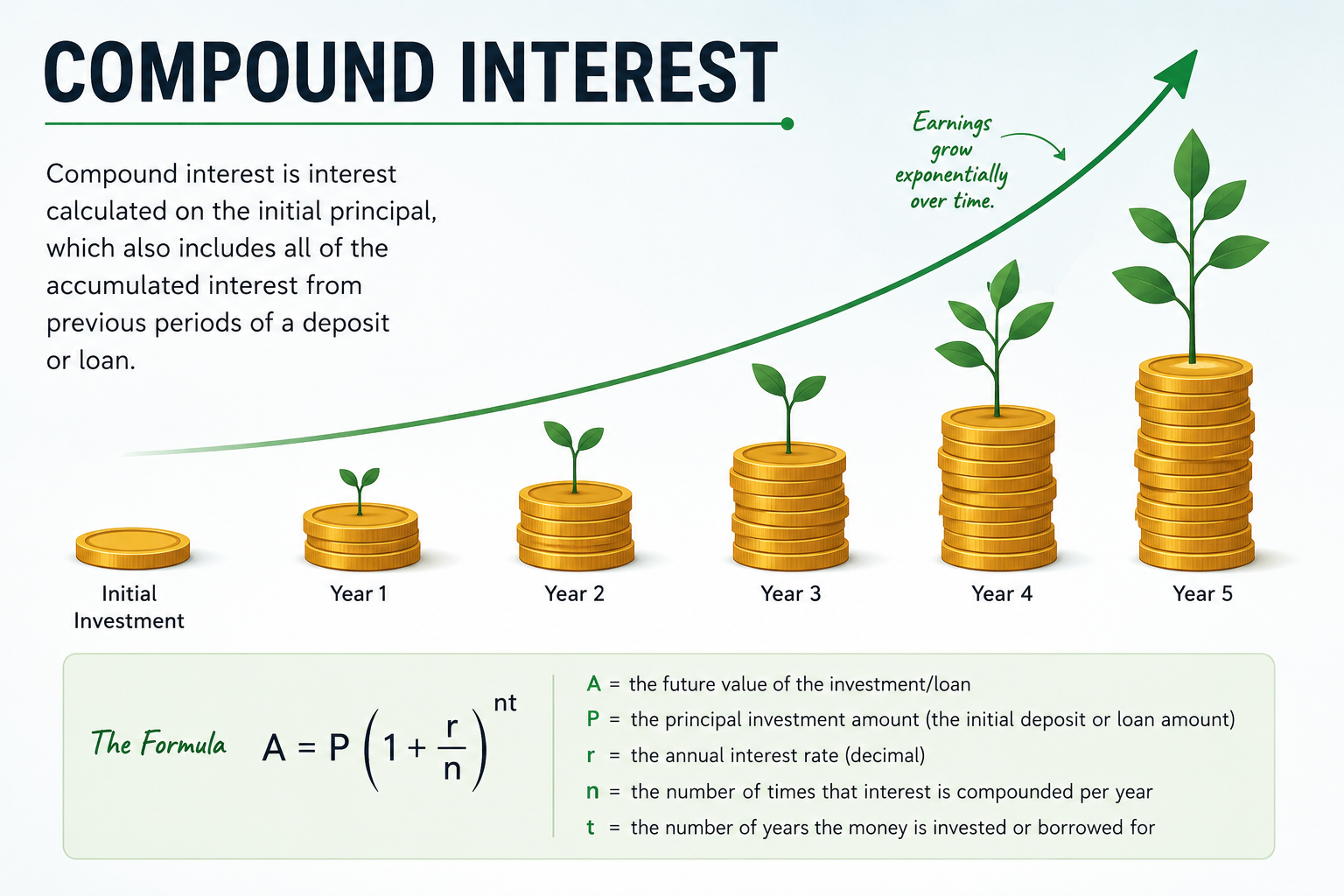
Compound interest is the process of earning returns on both your original investment and the profits that have already accumulated.
Unlike simple interest, which is calculated only on the initial amount invested, compound interest allows your money to grow exponentially as earnings are continuously reinvested.
In simple terms:
Money earns profits, and those profits earn additional profits.
How Compounding Works
Imagine investing Rs. 100,000 and earning an average annual return of 10%.
- Year 1: Rs. 100,000 becomes Rs. 110,000
- Year 2: Rs. 110,000 becomes Rs. 121,000
- Year 3: Rs. 121,000 becomes Rs. 133,100
As time passes, the growth accelerates because returns are being generated on a larger amount every year.
The Formula Behind Compound Interest
Where:
- A = Final amount
- P = Initial investment
- r = Annual interest rate
- n = Number of times interest is compounded per year
- t = Time in years
While investors do not need to calculate this manually every day, understanding the concept highlights the importance of starting early and staying invested.
Why Time Is Your Greatest Asset
Many investors focus solely on finding the next winning stock. However, time is often more important than investment amount.
Consider two investors:
Investor A
- Starts investing at age 25
- Invests regularly for 10 years
- Then stops contributing
Investor B
- Starts investing at age 35
- Invests regularly until retirement
Despite investing for fewer years, Investor A may accumulate more wealth because the investments had more time to compound.
This demonstrates why early investing is one of the smartest financial decisions.
Compound Interest in the Nepal Stock Market
Although stocks do not pay "interest" in the traditional sense, compounding works through:
- Capital appreciation
- Dividend reinvestment
- Long-term portfolio growth
- Consistent investing
Investors who reinvest dividends and remain invested through market cycles often benefit significantly from compounding over the long run.
Common Mistakes That Reduce Compounding Benefits
1. Starting Too Late
Delaying investments reduces the time available for growth.
2. Frequent Trading
Constant buying and selling can interrupt the compounding process.
3. Withdrawing Profits Too Early
Removing gains prevents future earnings from building on previous returns.
4. Chasing Short-Term Market Movements
Long-term wealth is usually built through patience and discipline rather than speculation.
Tips to Maximize Compound Growth
- Start investing as early as possible.
- Invest consistently regardless of market conditions.
- Reinvest dividends whenever possible.
- Maintain a diversified portfolio.
- Focus on long-term goals instead of short-term price fluctuations.
- Stay disciplined during market volatility.
Conclusion
Compound interest is not a get-rich-quick strategy. It is a wealth-building mechanism that rewards patience, consistency, and long-term thinking.
Whether you are a beginner investor or an experienced trader, understanding the power of compounding can help you make smarter financial decisions and achieve your investment goals.
At Sarbaguna Investment, we believe that successful investing is not about timing the market—it is about giving your investments enough time to grow. The sooner you begin, the greater the potential benefits of compounding over the years.
Tags


Leave a Comments
Comments
Related post


Popular






Recent Post
No comments yet.