

Balen Calls for Business Confidence as Nepal Private Sector Seeks Policy Reform
Balen Holds Two-Hour Dialogue With Nepal’s Private Sector, Calls for More Investment
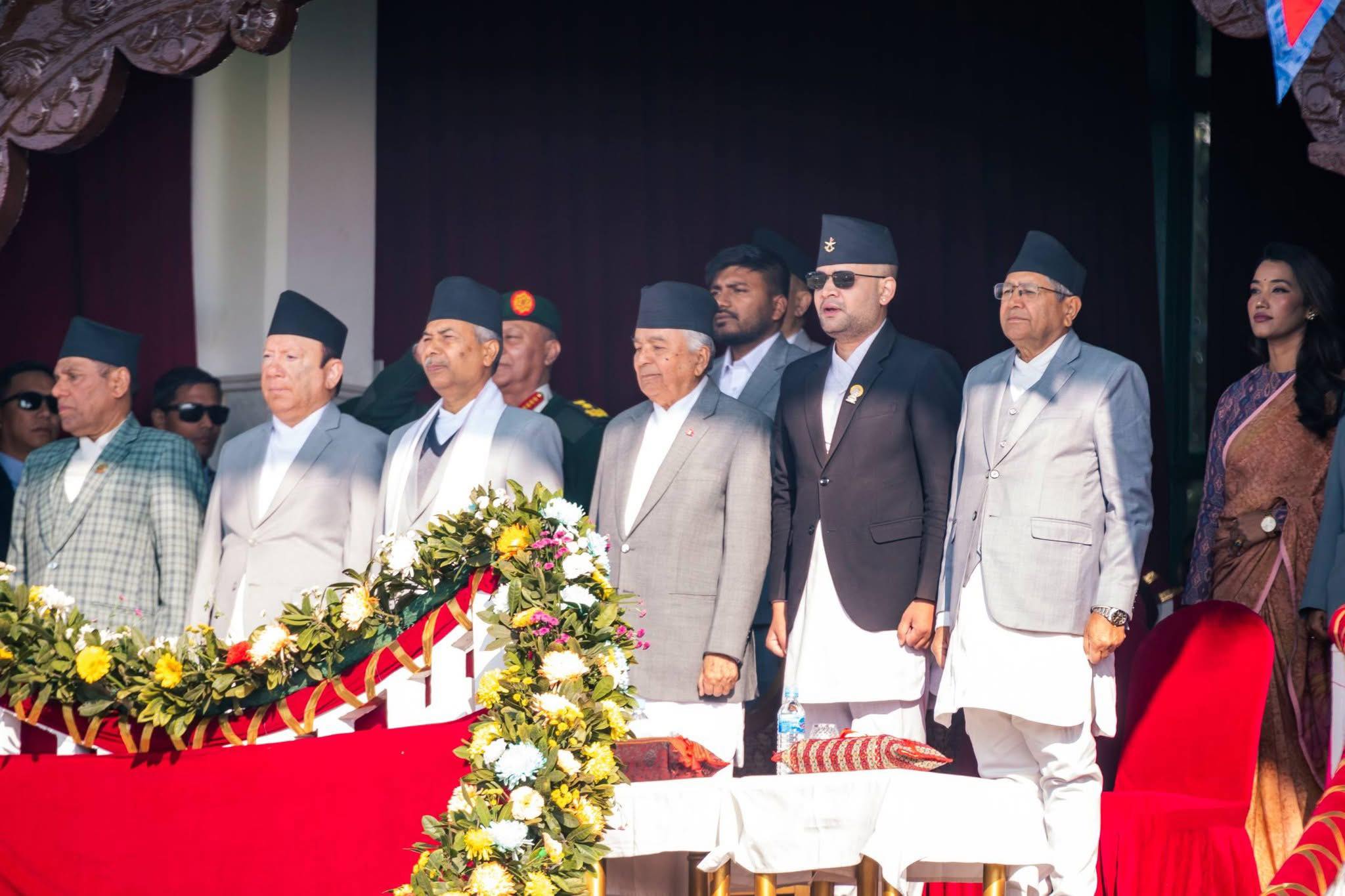
Prime Minister Balendra Shah (Balen) has held an extensive discussion with leading Nepali industrialists and business leaders, focusing on declining investor confidence, policy barriers and ways to create a stronger environment for private-sector investment.
What was initially planned as a 30-minute meeting continued for nearly two hours, reflecting the importance of the issues raised by the business community.
The meeting brought together prominent business leaders including Binod Chaudhary of Chaudhary Group (CG), Chandra Prasad Dhakal of IME Group, Umesh Shrestha of Little Angels’ Education Group, and Pawan Kumar Golyan of Golyan Group.
Prime Minister Shah had also invited Min Bahadur Gurung of Bhat-Bhateni Group, although he could not attend because of health reasons. The meeting was coordinated by Rastriya Swatantra Party lawmaker and businessperson Bidushi Rana.
Prime Minister Promises Policy Reform to Support Business
During the meeting, Prime Minister Shah reportedly said that the government is prepared to address problems faced by the private sector, including making amendments to existing laws or introducing new legislation where necessary.
He also assured business leaders that entrepreneurs should not face unnecessary harassment or detention and encouraged the private sector to invest and expand their businesses with greater confidence.
Chandra Prasad Dhakal, former president of the Federation of Nepalese Chambers of Commerce and Industry (FNCCI) and founding chairman of IME Group, said the meeting provided an opportunity for an open and detailed discussion about the challenges facing Nepal’s private sector.
According to Dhakal, business leaders presented concerns related to policy uncertainty and the investment environment.
He said the Prime Minister responded positively and discussed possible solutions to the problems raised by the business community.
Declining Investor Confidence Remains a Major Concern
One of the key issues discussed was the decline in investor confidence in Nepal.
Business leaders told the Prime Minister that although capital is available, many entrepreneurs currently lack the confidence to make new investments.
They argued that policy uncertainty, regulatory difficulties and concerns about the rule of law can discourage entrepreneurs from establishing new industries and expanding existing businesses.
The discussion covered several important sectors, including education, healthcare, agriculture and manufacturing.
The business community also emphasized that Nepal needs policies that encourage long-term investment rather than creating uncertainty for entrepreneurs.
Government and Private Sector May Establish Permanent Dialogue Mechanism
Another important proposal discussed during the meeting was the creation of a permanent mechanism for regular communication between the government and private sector.
Such a mechanism could allow business representatives to continuously raise policy problems, recommend reforms and coordinate with government agencies.
Dhakal said the Prime Minister appeared positive about establishing a regular platform where the government and private sector could discuss business-related challenges and solutions.
A stable dialogue mechanism could become particularly important for improving Nepal’s investment climate and encouraging domestic and foreign investment.
Balen Asks Business Leaders for a Written Roadmap
Prime Minister Shah also asked business leaders to prepare a detailed written roadmap explaining what the government needs to do to make Nepal more prosperous.
According to Umesh Shrestha, the Prime Minister wanted entrepreneurs to identify:
- Major policy barriers affecting investment
- Problems related to the rule of law
- Sectors where private investment can grow
- Reforms needed to encourage new industries
- Sector-specific challenges in education, healthcare and agriculture
- Areas that should receive investment priority
- Government actions required to improve the overall business environment
Business leaders are now preparing to discuss these issues collectively and submit a detailed report to the government.
Private Sector Says Nepal Could Grow Rapidly With Better Policies
Umesh Shrestha said business leaders were optimistic after the meeting.
He argued that Nepal could make significant economic progress within the next decade if policy and rule-of-law problems are addressed effectively.
The business community has also asked the government to identify and prioritize sectors where private investment can contribute most to economic growth.
The expectation is that recommendations from entrepreneurs will be incorporated into the government's future economic and investment plans.
‘Businesses Should Not Be Unnecessarily Detained’
The issue of alleged harassment and detention of businesspeople was also strongly raised during the discussion.
Business representatives argued that the state should create an environment in which entrepreneurs can operate confidently instead of becoming fearful of regulatory action.
They said that where financial or economic wrongdoing has occurred, appropriate financial penalties or compensation mechanisms could be considered, while unnecessary detention could damage investor confidence.
The concern is that a climate of fear can discourage both existing businesses and potential investors from committing capital to Nepal.
Prime Minister Shah reportedly assured the business community that entrepreneurs would not be unnecessarily targeted and encouraged them to continue expanding investment.
Government Says It Should Not Compete With the Private Sector
Another major point of discussion was the appropriate role of the government in business and industry.
Business leaders reportedly argued that the private sector should remain the primary engine of investment and economic activity, with the government focusing on regulation, infrastructure and creating a favorable investment environment.
They suggested that roughly 80 percent of investment could come from the private sector, while the government should concentrate on its core responsibilities rather than directly competing with private businesses.
Prime Minister Shah reportedly said that the government does not intend to operate businesses as a long-term strategy.
He indicated that some distressed state-owned industries, including certain textile, rubber and jute-related enterprises, could be operated by the government temporarily, while other areas should primarily be handled by the private sector.
What This Means for Nepal’s Economy and Investors
The dialogue between the Prime Minister and major business leaders highlights a crucial issue for Nepal: investor confidence.
For Nepal to accelerate economic growth, entrepreneurs need greater policy predictability, regulatory clarity, access to finance and confidence that investments will receive appropriate legal protection.
A stronger private sector can contribute to:
- New employment opportunities
- Industrial expansion
- Higher tax revenues
- Increased domestic production
- Greater foreign investment
- Expansion of capital markets
- Higher demand for skilled workers
- Long-term economic growth
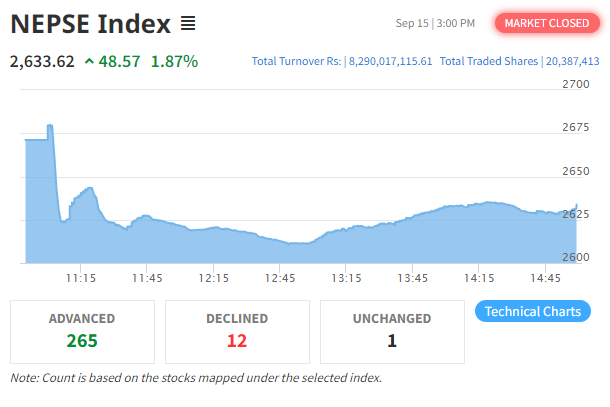
For investors, improvements in the business environment could also have implications for Nepal’s capital market and NEPSE.
Companies that benefit from increased investment, industrial expansion and stronger economic activity may create new opportunities for long-term investors. However, investors should always evaluate individual companies, financial performance, valuation, governance and risk before making investment decisions.
Nepal’s Private Sector and the Future of Investment
The meeting signals an attempt to rebuild communication between the government and Nepal’s business community.
Whether these commitments translate into meaningful policy reforms will be critical.
For entrepreneurs, investors and the broader economy, the most important question is no longer simply whether the government recognizes the problems. The real test will be whether those problems are followed by practical reforms, predictable policies and a stronger rule-of-law environment.
If the government and private sector can work together effectively, Nepal could create a more attractive environment for domestic investment, industrial development and capital-market growth.
For people interested in understanding Nepal’s share market, NEPSE investing and long-term investment strategies, financial education is equally important. Understanding market fundamentals, company analysis and risk management can help investors make more informed decisions.
Learn About Nepal’s Share Market
If you want to build your understanding of the Nepal share market, NEPSE and stock-market investing, explore the resources and training opportunities available through Sarbaguna.com.
Share Market Training Nepal can help beginners understand the fundamentals of investing, market analysis, portfolio management and responsible decision-making.
For information about share market training in Nepal, investment education and related financial-market topics, contact Deep Thapa via WhatsApp at 9849290806.
Disclaimer: This article is for educational and informational purposes only. It is not financial, investment or legal advice. Investors should conduct their own research and consider professional advice before making investment decisions.


Leave a Comments
Comments
Related post

Popular






Recent Post
No comments yet.