

Nepal Stock Market Recovery Plan: Economic Package, NEPSE Reform & Investor Confidence
Nepal Economic Recovery Plan: Stock Market Recovery Package, Business Incentives and FATF Exit Strategy
Nepal Prepares Economic Recovery Package as Government Targets Stock Market and Private Sector
Nepal is preparing a broad economic recovery package aimed at reviving business activity, strengthening investor confidence and supporting the country’s capital market.
Finance Minister Dr. Swarnim Wagle is reportedly working on a broader economic recovery strategy following a prolonged slowdown in economic activity and the damage caused by recent flooding. The proposed measures include a Nepal stock market recovery plan, private-sector incentives, support for flood-affected businesses and a strategy to help Nepal exit the FATF grey list.
The development could be particularly important for Nepal's share market investors, as policymakers are preparing a dedicated package focused on capital-market strengthening and restoring investor confidence.
Nepal Stock Market Recovery Plan in Preparation
Nepal's stock market has struggled to gain sustained momentum despite the formation of a strong government. According to the report, the Finance Ministry is preparing to unveil a dedicated stock market recovery plan in the coming week.
The proposed initiative, described as a capital market strengthening and stock market reform plan, is expected to address problems affecting the market while introducing measures designed to improve investor sentiment.
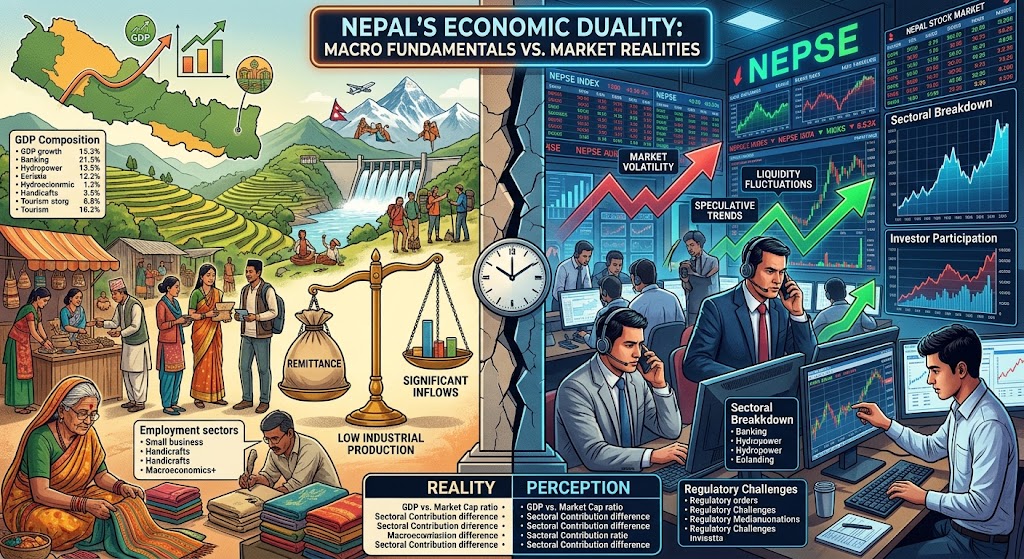
For investors following NEPSE, such policy measures could become an important factor to watch because regulatory reforms, investor confidence, liquidity and economic growth can all influence market activity.
However, investors should distinguish between a government recovery initiative and an immediate guarantee of higher share prices. A policy package may improve market conditions over time, but individual stocks will continue to carry company-specific and market risks.
Private-Sector Incentives Could Support Economic Recovery
The government is also preparing an economic relief and investment-promotion package for Nepal's private sector.
The proposed measures are expected to cover industries, businesses and service-sector companies, with the objective of improving business confidence and encouraging investment.
The government had previously discussed such measures with representatives of the private sector. However, the devastating floods subsequently disrupted the implementation process.
A stronger private sector could have wider implications for Nepal's economy, including investment, employment, production and demand.
Flood-Affected Businesses to Receive Additional Support
The government has already introduced an initial package for businesses affected by the floods.
The first phase reportedly included tax relief and customs-duty exemptions for importing materials required for reconstruction. A second phase is being prepared with a longer-term focus on economic rehabilitation in affected areas.
The scale of reconstruction could also create demand for additional domestic and international financing.
Nepal Working on FATF Grey-List Exit Strategy
Another major component of the government's economic plan is Nepal's effort to leave the Financial Action Task Force (FATF) grey list.
The proposed strategy includes stronger supervision of banking and financial institutions, real-estate businesses, casinos and precious-metal transactions. Measures to discourage informal hundi transactions are also part of the plan.
Successfully addressing FATF-related concerns could improve Nepal's financial-system credibility and potentially support the country's investment environment.
Post-Disaster Needs Assessment Underway
The government is also assessing the financial impact of the recent floods.
The National Planning Commission is preparing a Post-Disaster Needs Assessment (PDNA) to determine the scale of damage and reconstruction requirements. Initial estimates cited in the report put the damage at roughly Rs 5–6 trillion, with reconstruction costs potentially exceeding that figure by another Rs 1–2 trillion.
Once the assessment is completed, Finance Minister Wagle is expected to seek international financial support from donor countries and institutions.
The government has also highlighted the climate-related nature of the disaster and has approached the climate loss-and-damage mechanism for support.
What Could the Nepal Stock Market Recovery Plan Mean for Investors?
A dedicated stock-market recovery plan could become an important development for Nepal's capital market.
Investors should watch for details concerning:
- Capital-market reforms
- Investor protection
- Regulatory improvements
- Market liquidity
- Institutional investment
- Listed-company governance
- Trading and settlement infrastructure
- Policies designed to improve investor confidence
The actual impact will depend on the final measures announced and how effectively they are implemented.
For new investors, understanding NEPSE fundamentals, technical analysis, risk management and portfolio management is important before making investment decisions.
Why Share Market Education Matters in Nepal
Policy announcements can create optimism in the market, but successful investing requires more than following headlines.
Anyone interested in the Nepal share market should understand:
- How NEPSE works
- How to analyze financial statements
- Fundamental analysis
- Technical analysis
- Support and resistance
- Risk management
- Portfolio diversification
- Market psychology
- Position sizing
- Long-term investment strategies
If you are looking for structured share market training in Nepal, Sarbaguna.com can be used as a resource for learning about the Nepal stock market, trading and investment education.
Nepal Economy and NEPSE: What Investors Should Watch Next
The coming weeks could be important for both the Nepalese economy and the country's capital market.
Investors should monitor the government's final economic recovery package, the proposed Nepal stock market recovery plan, private-sector incentives, flood-reconstruction measures and progress on the FATF grey-list issue.
Rather than reacting to individual headlines, investors should evaluate whether announced policies translate into measurable improvements in economic activity, corporate earnings, liquidity and investor confidence.
Frequently Asked Questions
1. What is Nepal's stock market recovery plan?
Nepal's stock market recovery plan is a proposed government initiative aimed at strengthening the capital market and improving investor confidence. The Finance Ministry is preparing measures under a broader capital-market strengthening and stock-market reform framework.
2. Will the stock market recovery plan increase NEPSE?
A recovery plan could improve market sentiment and address structural problems, but it does not guarantee that NEPSE will rise. Market performance will also depend on corporate earnings, liquidity, interest rates, economic conditions and investor sentiment.
3. When will Nepal's stock market recovery plan be announced?
According to the report, the Finance Ministry was preparing to make the stock-market recovery plan public in the following week.
4. What is Nepal's economic recovery package?
The proposed package includes measures targeting the stock market, private-sector recovery, investment incentives and businesses affected by flooding.
5. Why is FATF important for Nepal?
FATF compliance is important for Nepal's international financial credibility. The government's strategy includes stronger supervision of financial institutions and several high-risk sectors, along with measures to discourage informal financial transactions.
6. Is this a good time to invest in Nepal's share market?
Investors should not make decisions solely based on the announcement of a recovery package. Before investing, consider company fundamentals, valuation, risk tolerance, market conditions and your investment horizon.
7. Where can I learn share market investing in Nepal?
Investors looking for share market training in Nepal can explore educational resources and market-learning programs available through Sarbaguna.com.
Final Takeaway
Nepal's proposed economic recovery strategy could mark an important step toward rebuilding investor confidence, supporting private businesses and strengthening the country's capital market.
For NEPSE investors, the proposed stock market recovery plan deserves close attention. However, the long-term success of the initiative will ultimately depend on the quality of reforms, implementation and the broader recovery of Nepal's economy.
For share market training, stock market education and investment learning in Nepal, visit Sarbaguna.com or contact Deep Thapa on WhatsApp at 9849290806.


Leave a Comments
Comments

Popular




Recent Post
No comments yet.